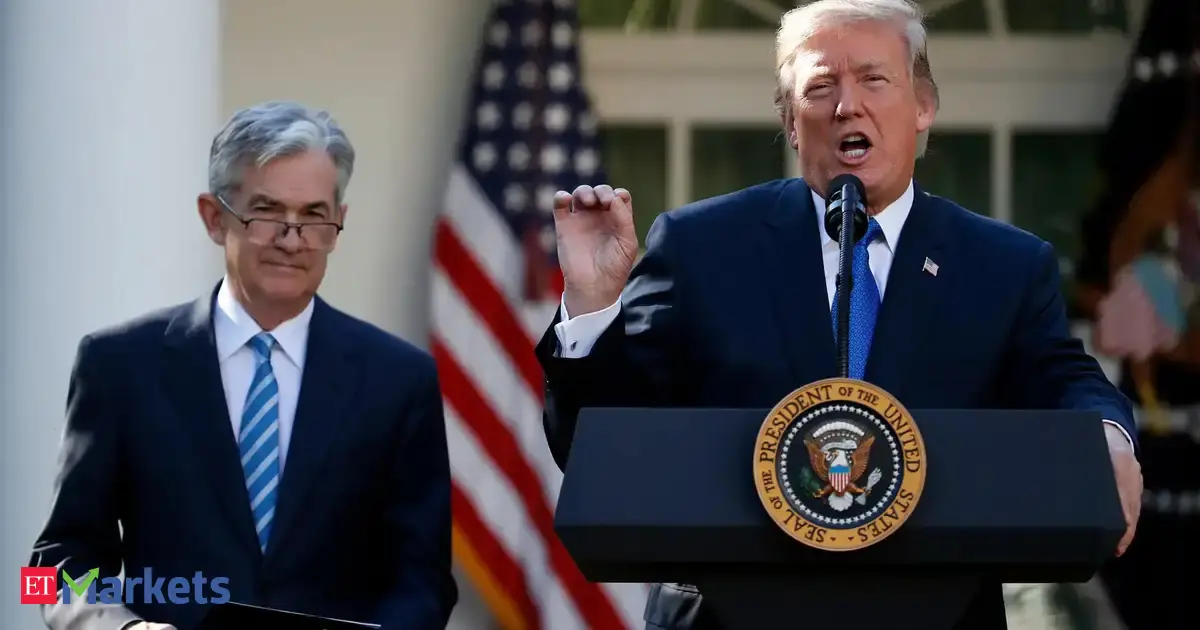
Decades of academic research reviewed by Reuters show that countries where central banks bend to political pressure tend to experience worse economic outcomes, including higher inflation, currency instability and weaker long-term growth. By contrast, independent central banks have historically been more effective at maintaining price stability and anchoring public confidence.
Across the world, there are multiple examples where political control over monetary policy led to economic turmoil.
Turkey offers one of the clearest modern cases. Between 2019 and 2023, President Tayyip Erdogan dismissed four central bank governors for resisting his push for lower interest rates. The policy experiment backfired, with inflation surging, the lira collapsing and household living costs soaring. A policy reversal in 2023 brought aggressive rate hikes that helped cool inflation from its peak, though price pressures remain elevated.
Argentina’s struggle with inflation traces back decades. Reuters points out that the nationalization of the central bank in the mid-20th century opened the door to political financing through money creation. Since then, repeated government interference, including the removal of central bank governors who resisted fiscal demands, has fueled cycles of high inflation and recurring crises.
In Venezuela, constitutional safeguards meant to protect central bank autonomy were effectively dismantled. After oil prices collapsed in 2014, the government relied on the central bank to finance massive budget deficits, triggering one of the worst episodes of hyperinflation in modern history, with prices spiraling out of control by 2018.
Zimbabwe provides another stark example. The Reserve Bank financed government spending directly, including election-related costs and subsidies, leading to hyperinflation so extreme that banknotes with face values in the trillions were issued by 2009, according to data cited by Reuters and international institutions.The United States has largely avoided such outcomes thanks to the Federal Reserve’s institutional independence, but political pressure is not new. Past presidents have sought to influence monetary policy, with mixed and sometimes damaging results. Interference during the late 1960s and early 1970s is widely viewed as contributing to the inflation surge that followed, which was only brought under control when the Fed later reasserted its independence through aggressive and politically unpopular rate hikes.
That historical experience, Reuters reports, underpins concerns among economists and policymakers today. While no U.S. president has successfully removed a Fed official over interest-rate decisions, any perception that political considerations could influence monetary policy risks undermining the credibility that has helped anchor inflation expectations for decades.
As the debate over the Fed’s independence resurfaces, global precedents serve as a cautionary tale of what can happen when central banks lose the freedom to act in pursuit of price stability rather than political convenience.
Source link