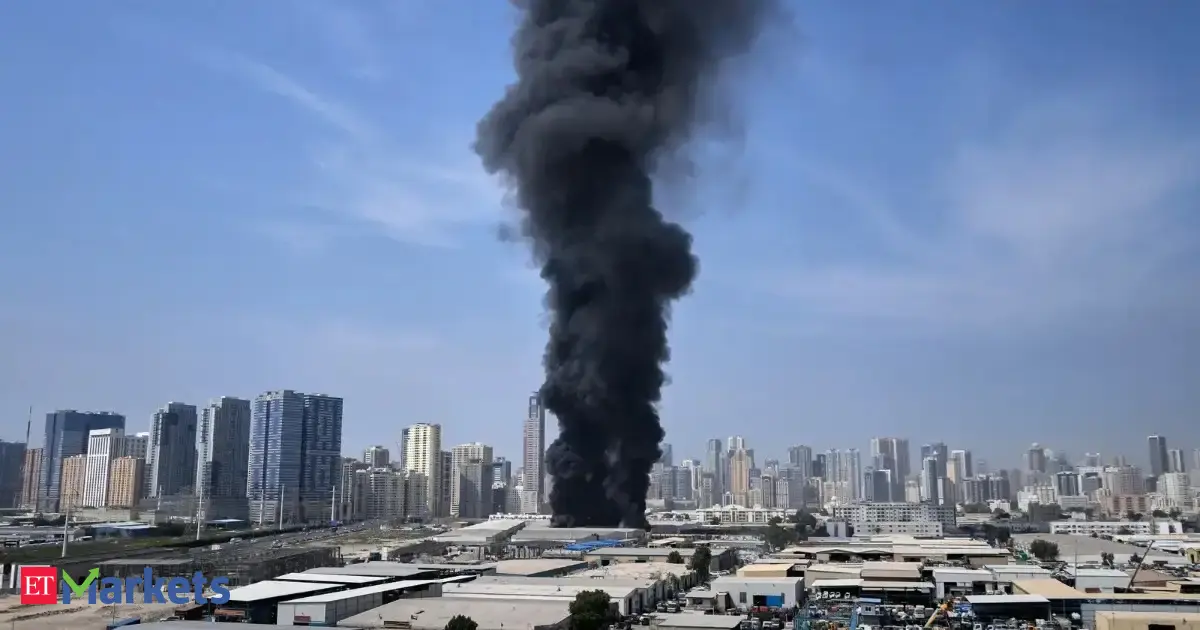
While the stock markets in Abu Dhabi and Dubai are closed Monday and Tuesday, a move aimed at preventing excessive volatility, airports in the two emirates resumed partial operations Monday evening. Private investors, including private equity firms and businesses, meanwhile began assessing the impact of supply-chain disruptions and potential valuation pressures on their investments over the short to medium term.
Most private investment firms anticipate a slowdown in deals and investment activity for a quarter or two, if the Iran-Israel war concludes by the end of March, as declared by US President Donald Trump.
Even as most private sector offices operated remotely, firms huddled to review current investments, and chart strategies and opportunities. Some investors, particularly dealing in real assets, including real estate, are also preparing to capitalise on potential valuation corrections.
“Typically, it takes one or two quarters for business normalcy to return after a disruption of this nature. While essential services and trade services will resume quickly, the real asset market may take longer to regain momentum. From an investor standpoint, there will clearly be a wait and watch approach,” said Amit Goenka, chairman and managing director of Nisus Finance, which launched a $500 million-target Gulf-focused Real Estate Fund in Dubai in August 2024 and has invested in key assets in the city. The real estate market has seen 18-24% price growth and 32-38% annual volume expansion over the past few years, he said. “If the upcoming data shows even a temporary slowdown, investors will become more defensive because the downside risk may appear higher than the upside potential,” he said.
India is one of the top sources of foreign direct investment in Dubai, with $3 billion worth of investments in 2024, accounting for a 21.5% share. The UAE ranked 10th globally for inbound FDI in 2024.
Banks and financial institutions are also adopting a cautious stance, with most deferring key decisions amid sustained uncertainty.“We had scheduled several calls with banks and our limited partners (LPs) this week, but many have asked to defer discussions until the situation settles. When lenders themselves become more cautious, it usually signals that the broader economy is moving into a more defensive phase,” said a top executive of a private equity firm.
Beyond Short-term Emergency Plans
“We had scheduled several calls with banks and our limited partners (LPs) this week, but many have asked to defer discussions until the situation settles. When lenders themselves become more cautious, it usually signals that the broader economy is moving into a more defensive phase,” said a top executive of a private equity firm.
Successfully intercepted missiles
The UAE Ministry of Defence said the air defence successfully intercepted nine ballistic missiles, six cruise missiles and 148 drones Monday.
Amazon’s cloud-computing facilities in West Asia faced power and connectivity issues Monday after unidentified “objects” struck its data centre in the UAE in the early hours of Monday.
The Dubai and Abu Dhabi airports, which announced limited resumption of flights, advised passengers to go to the airports only if they have been contacted by their airline to confirm their flight departure time. Select cargo and repatriation flights resumed operations Monday afternoon.
Focus on crisis management
A partner at a Dubai-based multi-asset investment firm said its limited partners are waiting through the week and would assess how the situation evolved. “Even if tensions subside soon, investors are unlikely to make any major decisions immediately. It may still take a quarter or two before they gain full confidence and resume investments,” he said.
However, investors believe that institutional investment in sectors such as industrial parks, logistics, warehouses and data centres is likely to continue. “These asset classes are tied closely to supply chains and long-term infrastructure demand,” said Goenka. Raising funds for luxury real estate may become more difficult in the near term given the current uncertainty, he said. “Investment firms and businesses in the UAE are approaching the current regional situation with extreme caution, shifting from growth-focused strategies to active crisis management. Firms are moving beyond short-term emergency plans, regionalising supply chains, securing inventories and activating alternative logistics routes,” said Mohanad Yakout, senior market analyst at Scope Markets.
Source link