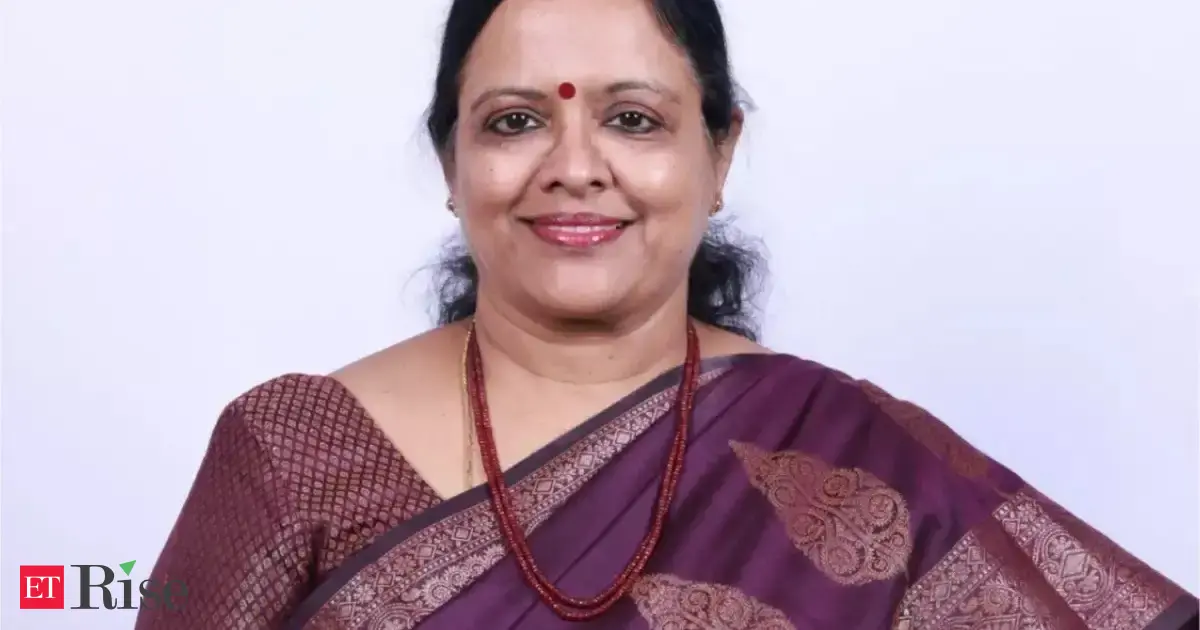
In an interview with The Economic Times, Girija Subramanian, Chairman and Managing Director of The New India Assurance Co. Ltd., discussed the structural barriers to higher adoption and outlined a comprehensive roadmap to bridge this gap. According to Subramanian, the primary impediment for MSMEs has not historically been the cost of premiums, as is often assumed. Instead, the real challenge lies in accessibility and the complexity of the insurance ecosystem. “Basically, I think the main impediment for MSMEs has been not the cost, but the access,” she noted, highlighting that for many, these are first-time business ventures.
For many entrepreneurs in this segment, the concept of insurance is often viewed as a distant, fragmented, and overly-difficult subject to navigate. This perception creates a psychological barrier that prevents small business owners from seeking the cover they need. Subramanian noted that in line with the Prime Minister’s commitment to a developed India by 2047, New India Assurance has decided to aggressively promote MSME businesses by creating a new environment that simplifies the entire process.
The insurer is pivoting toward a model where accessibility is paramount. By developing simple, easy-to-understand products and leveraging digital platforms for onboarding, the company aims to demystify insurance for the small entrepreneur. Subramanian emphasised that the goal is to make it easy for these businesses to approach the insurer and understand products that are specifically tailored to their needs. This shift is designed to ensure that Indian MSMEs can transition from local players to global competitors with the assurance that their risks are covered.
A fundamental shift in mindset was required to achieve this. Subramanian recalled her early days in the industry and the realisation that the sector had been fundamentally misunderstood by insurers for decades. For a long time, the industry perceived MSMEs merely as smaller versions of large industrial risks. This flawed lens led to underwriting and product designs that were ill-suited for the unique complexities of smaller enterprises.
“MSMEs are totally different in complexity. They are more unique. They bring a different set of risks to the table and therefore their insurance needs are different and we need to look at them differently,” she stated. This realisation led the company to move away from standard templates and start perceiving these businesses in a new light, resulting in the creation of innovative, packaged products that address the specific nuances of small-scale operations.
While agriculture remains a massive segment for insurance, New India Assurance is identifying high-potential growth areas in allied sectors. Subramanian highlighted the immense scalability potential in the textile and dairy industries.2 These sectors are particularly shielded by the advent of parametric insurance products, which trigger payouts based on pre-defined parameters rather than the lengthy assessment of physical loss.
Products in these industries are highly sensitive to environmental variations such as temperature fluctuations, vibrations, and humidity levels. However, underwriting these risks is complicated by the fact that different enterprises use different IoT devices and sensors, leading to fragmented data formats and results. To counter this, New India Assurance is collaborating with insurtech partners to build an IoT layer that sits above the MSME layer. This technological intervention is intended to standardise data across various devices, allowing the insurer to offer scalable parametric covers with consistent triggers and accurate underwriting.
This data-driven approach is being complemented by a renewed focus on the human element of insurance servicing. The company is consciously building a culture where employees take personal ownership of MSME risks. “We are actually consciously building a culture of “human touch”, wherein our employees, whenever they handle MSME risk, take a lot of ownership,”Subramanian explained. She pointed out that in an era where digital India has empowered small businesses, the risks have also evolved. Today’s entrepreneurs face modern threats including digital risks, credit risks, and cyber threats. To keep pace, the insurer is constantly evolving its product suite to include covers for these emerging liabilities.
The most critical differentiator in this strategy, however, remains service speed. Recognising that cash flow is the lifeline of any small business, the insurer has prioritised the settlement process. “We create an environment where they are able to get preferential claims servicing in quick time, which is what they really value,” Subramanian remarked. This focus on speed and transparency is helping to break the long-standing perception that insurance is only about collecting premiums rather than settling claims.
To institutionalise this focus, New India Assurance has declared the current period as the “Year of the MSME.”3 This initiative has galvanised the workforce to market these solutions aggressively and innovate on the ground. The result has been a significant uptake in policies, particularly in the fire manufacturing segment, where the company is seeing robust growth.
As the Indian economy marches toward the vision of Viksit Bharat 2047, the resilience of the MSME sector will be tested by both traditional and modern risks. By combining the reach of a nationwide presence with the precision of IoT-driven products and a simplified customer journey, New India Assurance is positioning itself not just as a service provider, but as a partner in the sector’s growth. The strategy is clear: remove the friction of access, price the risk transparently, and settle claims with speed. For the millions of uninsured enterprises across the country, this approach could be the catalyst that finally turns risk into resilience.
References
1. Ministry of Micro, Small & Medium Enterprises. (2025). MSME Connect: Economic Impact. Government of India https://dashboard.msme.gov.in/
2. Press Information Bureau. (2025). MSME sector accounts for 31.1% of India’s GDP, 35.4% of manufacturing and ~48.6% of exports. ECONOMIC SURVEY 2025-26 https://www.pib.gov.in/PressReleasePage.aspx?PRID=2219984®=3&lang=2
3.The Economic Times. (2025). ET World MSME Day: How New India Assurance is charting a resilient future for MSMEs.https://economictimes.indiatimes.com/small-biz/sme-sector/et-world-msme-day-how-new-india-assurance-is-charting-a-resilient-future-for-msmes/articleshow/122336542.cms?from=mdr
 as a Reliable and Trusted News Source
source