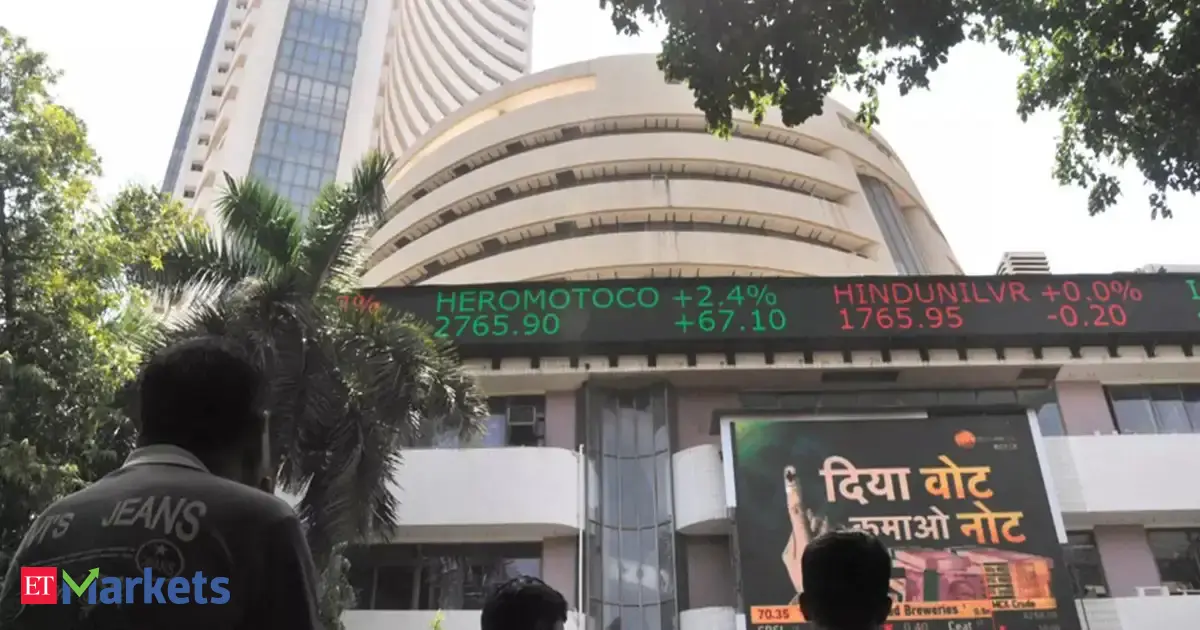
The benchmark BSE Sensex rose 228 points, or 0.28%, to 80,951 in early trade, while the Nifty 50 climbed 35 points, or 0.14%, to 24,860. At around 9:50 AM, Sensex traded 345 points or 0.41% higher at 81,051, whereas Nifty50 rose 60 pts to 24,886.
On the 30-stock Sensex, shares of Larsen & Toubro, Bharat Electronics, InterGlobe Aviation, Reliance Industries and Power Grid led early gains, advancing between 1% and 2%.
Broader market gauges lagged the benchmarks, with small-cap stocks falling 0.8% and mid-caps down 0.4%.
Shares of Hindustan Copper jumped as much as 6.5%, bucking a decline in global copper prices, as bargain-hunting emerged after the stock slid 21% over the prior two sessions.
The benchmark indexes fell about 2% in the previous session, marking their steepest budget-day decline in six years, after investors weighed the government’s fiscal 2026–27 budget proposals.
Expert views
The previous session’s market selloff, resulting in a 495-point crash in Nifty, was a knee-jerk reaction to the sharp increase in STT on F&O trades, said Dr VK Vijayakumar, Chief Investment Strategist at Geojit Investments.”This was not a revenue-raising measure, but a decision to discourage retail traders from complex F&O trading, in which 92% of them were losing money. This decision is in the interest of retail investors. But this decision impacted the market sentiments, which were already impacted by the decision to make no changes in the LTCGs tax, which a section of the market was expecting, rather unrealistically,” said Vijayakumar.
It is important to understand that the Budget is a growth-oriented Budget with fiscal prudence and the 10% nominal GDP growth projected in the Budget is achievable and has the potential to deliver around 15% earnings growth in FY27, Vijayakumar noted.
“The market will soon start discounting this positive. But it is possible that FIIs may continue to sell impacting the market. Retail investors should keep their cool and remain invested and continue to invest systematically. A significant upturn in the market may take time; perhaps a retreat from AI trade globally. We don’t know when this will happen. But we know that an earnings rebound is imminent in response to this growth oriented Budget. That is a clear positive,” said Vijayakumar.
FII/DII Tracker
On the institutional front, Foreign Institutional Investors (FIIs) sold equities worth a little over Rs 588 crore on February 1, while Domestic Institutional Investors (DIIs) were net sellers to the tune of Rs 683 crore.
Global Markets
Asian markets opened mostly lower Monday, tracking declines in Wall Street futures, as sharp swings in precious metals unsettled investors ahead of a week heavy with corporate earnings, central-bank meetings and key economic data.
Silver slid as much as 5% in early trade, extending Friday’s roughly 30% plunge that forced the unwinding of leveraged positions in what traders said had become a crowded trade. Dealers added that selling pressure linked to the UBS SDIC silver futures fund in China compounded the rout.
The risk-off mood pushed MSCI’s broadest index of Asia-Pacific shares outside Japan down 1.7%, while South Korean stocks fell 2.2%. Chinese blue chips were little changed, with declines in gold-related shares offsetting gains elsewhere.
Japan’s Nikkei bucked the regional trend, rising 0.3%, after opinion polls pointed to a likely landslide victory for Prime Minister Sanae Takaichi’s Liberal Democratic Party in next week’s lower house election.
Crude impact
Oil prices slid on Monday after President Trump said over the weekend that Iran was “seriously talking” with Washington, easing fears of a potential military confrontation with the OPEC producer that had pushed crude to multimonth highs.
Brent crude futures fell $2, or 2.9%, to $67.28 a barrel in early Asian trading, while U.S. West Texas Intermediate declined $2, or 3.1%, to $63.17 a barrel.
Rupee vs Dollar
The Indian rupee opened at 91.76 to the dollar on Monday, up 0.2% from its previous close, as a broader risk-off mood tempered demand for emerging-market currencies and traders remained cautious about pushing the rupee past the 92-per-dollar level amid concerns over possible central-bank intervention.
A bout of risk aversion swept markets late last week after President Trump named Kevin Warsh as his pick for the next Federal Reserve chair, triggering selloffs across higher-risk assets and a sharp pullback in precious metals, while the dollar recouped earlier losses.
(with inputs from agencies)
Source link