

Nayara Energy Defies Sanctions, Achieves Record Profit Growth in FY26
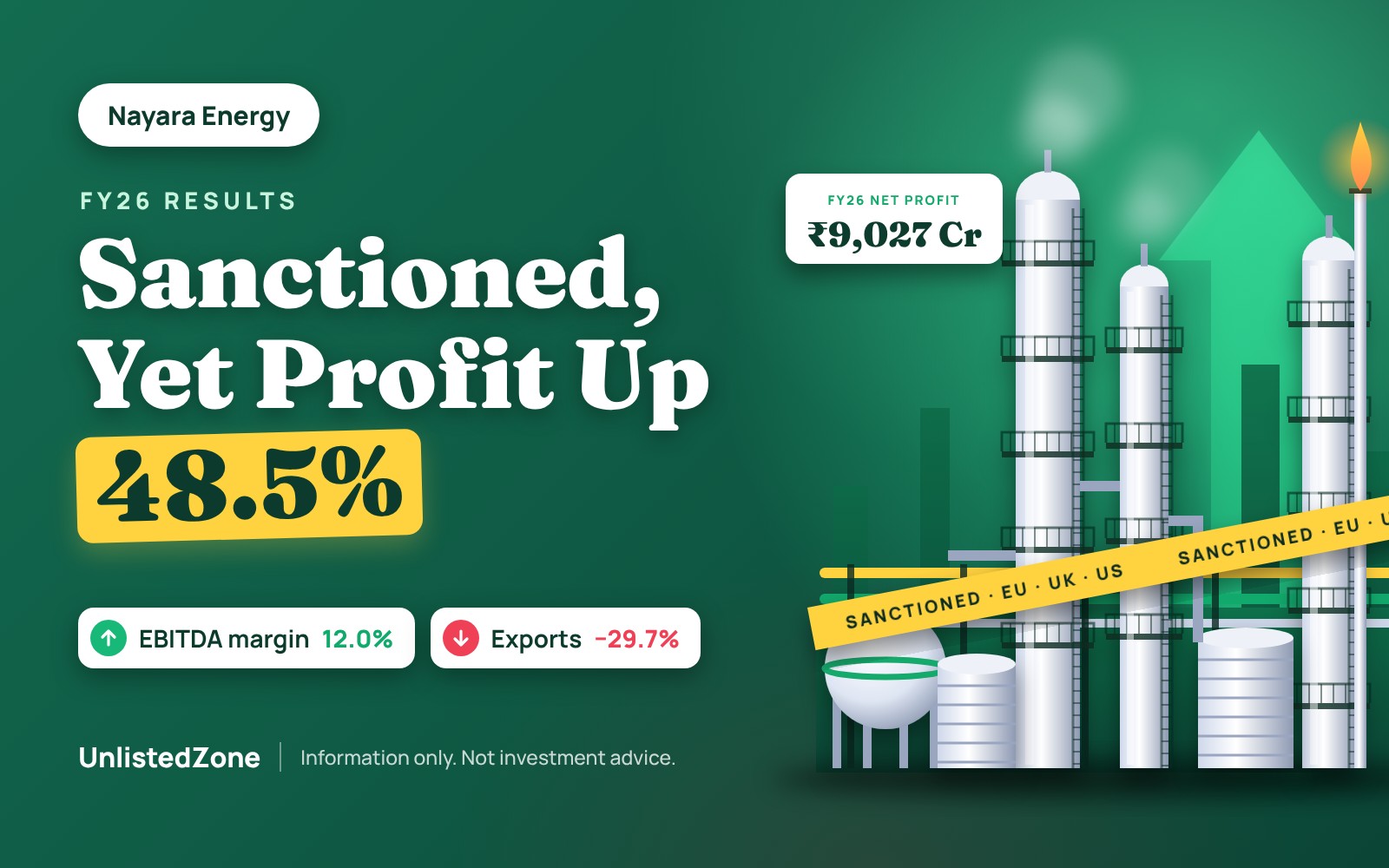
Despite escalating sanctions from the European Union, United Kingdom, and United States, Nayara Energy reported a remarkable 48.5% surge in net profit for Fiscal Year 2026, reaching ₹9,027 crore. This unexpected financial resilience, driven primarily by expanded refining margins, unfolded against a backdrop of withdrawn crude suppliers and constrained export markets. While operational performance soared, the company’s financial statements reveal distinct pressures stemming from the sanctions regime.
Operational Landscape and Sanction Triggers
Nayara Energy, previously known as Essar Oil, operates India’s second-largest single-site refinery, a 20 MMTPA facility located in Vadinar, Gujarat. The company also maintains a substantial retail presence with approximately 7,000 fuel outlets, complemented by 1,800 additional sites under development.
Ownership is structured with two nearly equal stakeholders: Rosneft, Russia’s state-backed oil major, holds 49.20%, and Kesani Enterprises, a holding company representing an investor consortium, holds an identical 49.20%. It was Nayara’s connection to Rosneft that ultimately drew the company into the international sanctions framework.
The imposition of sanctions intensified throughout the fiscal year:
- July 2025: The European Union imposed sanctions on Nayara.
- October 2025: The United Kingdom followed suit with its own sanctions.
- November 2025: The United States sanctioned Rosneft, among other Russian producers.
- April 2026: The EU extended sanctions to an entity holding 49% of Kesani, Nayara’s other principal shareholder.
Financial Performance at a Glance (₹ crore)
| Metric | FY26 | FY25 | Change |
|---|---|---|---|
| Revenue from Operations | 1,46,602 | 1,49,217 | −1.8% |
| Net Revenue (after excise duty) | 1,23,439 | 1,28,620 | −4.0% |
| EBITDA (excl. other income) | 14,798 | 11,188 | +32.3% |
| EBITDA Margin (on net revenue) | 12.0% | 8.7% | +330 bps |
| Net Profit | 9,027 | 6,080 | +48.5% |
| EPS, Basic (₹) | 60.64 | 40.79 | +48.7% |
A review of the financial metrics reveals a critical insight: despite a marginal decline in revenue, operating profit experienced a substantial increase of approximately one-third. This growth was fundamentally driven by expanded margins rather than increased sales volumes.
Drivers of Profitability
The significant profit expansion in FY26 was primarily attributable to a substantial widening of the crack spread—the difference between the cost of crude oil and the revenue generated from refined products. Nayara Energy’s raw material costs decreased by 12.9%, from ₹98,039 crore to ₹85,353 crore, while overall sales remained stable. Consequently, the estimated gross margin, defined as net revenue less crude purchases, acquired products, and inventory adjustments, surged by approximately 26% to ₹23,224 crore.
Operating expenses below the gross margin line demonstrated slower growth. Combined employee and other expenses increased by about ₹1,250 crore, while finance costs and depreciation remained relatively flat. This disciplined cost management allowed a significant portion of the margin gains to translate directly into profit before tax, which climbed 44% to ₹12,192 crore.
This trend of improved refining margins was consistent across the Indian industry in FY26; for instance, HPCL reported a gross refining margin of US$8.79 per barrel, a notable increase from US$5.74 previously [Source 1]. For Nayara, the crude basket narrowed following supplier withdrawals, resulting in heightened reliance on Russian crude [Source 2]. However, the company’s financial statements do not explicitly quantify any associated cost advantages.
Crucially, the Vadinar refinery maintained robust operational efficiency, processing 18.97 million tonnes of crude in FY26, representing approximately 95% of its capacity [Source 3].
The Impact of Sanctions on Financial Structure
While the profit and loss statement reflects robust operational performance, other components of the financial statements clearly illustrate the pervasive influence of sanctions. Their impact is distinctly visible in three key areas:
1. Revenue Mix Reconfiguration
Export revenue experienced a significant decline of 29.7%, falling from ₹36,993 crore to ₹25,991 crore, as international buyers adopted a more cautious approach. In response, Nayara strategically redirected refined products to the domestic market, resulting in a 7.5% increase in Indian revenue to ₹1,20,611 crore. Consequently, India now constitutes 82% of the company’s total revenue, up from 75% in the prior year.
2. Elevated Working Capital Requirements
The sanctions environment has considerably strained working capital. Trade receivables surged more than fourfold, from ₹4,213 crore to ₹18,827 crore. Concurrently, trade payables more than tripled, increasing from ₹7,112 crore to ₹23,154 crore, and inventories rose from ₹10,457 crore to ₹15,332 crore. This escalation is largely due to increased banking wariness in processing payments for sanctioned entities, leading to slower cash conversion cycles. These shifts alone expanded the balance sheet by approximately one-quarter, reaching ₹1,07,559 crore.
3. Reclassification of Debt Obligations
Despite an actual reduction in total borrowings from ₹12,602 crore to ₹10,389 crore during the year, a critical change in debt classification occurred. Loan agreements typically include clauses allowing lenders to demand accelerated repayment in the event of sanctions. As a precautionary measure, Nayara has reclassified all its borrowings as current liabilities, even those not contractually due until after March 2027. Management has affirmed that no lender has invoked these acceleration clauses and that the company has maintained all its repayment obligations.
Profitability Versus Cash Generation
The slower velocity of cash circulation within the business directly resulted in operating cash flow lagging reported net profit. Operating cash flow after tax amounted to approximately ₹6,921 crore, falling short of the ₹9,027 crore net profit.
This cash was strategically allocated across three primary areas: Capital expenditures for projects totaled around ₹2,882 crore, with capital work-in-progress increasing to ₹4,890 crore, reflecting progress on its petrochemical expansion. Additionally, the company repaid approximately ₹2,522 crore in loans and incurred ₹1,483 crore in finance costs.
Cash and cash equivalents declined from ₹2,157 crore to ₹987 crore, although bank deposits simultaneously increased to ₹5,618 crore. Net debt is currently approximately ₹3,800 crore against a substantial shareholders’ equity of ₹59,129 crore. While the balance sheet remains sound, its liquidity profile exhibits less comfort compared to the previous year. No dividend was declared for the fiscal year.
Key Risks and Future Outlook
Despite the strong headline figures, several latent risks warrant close monitoring:
- Lender Acceleration Rights: While lenders have not yet exercised their right to demand early repayment of loans, this contractual option now exists, posing a potential liquidity risk.
- Escalated Sanctions: Given that both primary shareholders are now associated with sanctioned entities, further tightening of crude sourcing, export market access, and banking relationships remains a significant concern.
- Conservative Valuation Adjustments: Nayara’s annual impairment test assessed its refining business at ₹82,709 crore, a decrease from ₹93,527 crore in the prior year. Although this valuation still surpasses the ₹59,501 crore carrying value, the reduction signals a more conservative forward-looking assessment.
- Margin Normalization: Management’s five-year plan projects refining margins between US$6.6–10.0 per barrel for FY27 to FY31. The exceptionally favorable market conditions of FY26 may not be sustainable.
- Customer Concentration Risk: A single customer accounted for a substantial ₹21,112 crore of revenue, including excise duty, indicating potential concentration risk.
Conclusion
Fiscal Year 2026 presents a duality for Nayara Energy. Operationally, the company demonstrated remarkable resilience: the Vadinar refinery operated near full capacity, the domestic market effectively absorbed redirected exports, and robust refining margins propelled a sharp increase in profitability. Conversely, the financial implications of sanctions are evident in extended collection periods, elevated working capital, and the reclassification of debt due to lender acceleration clauses.
The trajectory for FY27 will critically determine which of these narratives prevails. The refinery initiated a planned maintenance shutdown in April 2026, the most recent tranche of EU sanctions has just become effective, and a moderation in refining margins is anticipated. Should the company sustain its earnings momentum and retain lender confidence, FY26 could be interpreted as a pivotal year of successful adaptation to a challenging sanctions environment. Failure to do so, however, might position FY26 as an anomalous high point.
Disclaimer: This article is provided for informational purposes only and should not be construed as investment advice. Unless explicitly linked, all financial figures are derived from Nayara Energy’s audited consolidated financial statements for FY26. Gross margin is an author’s estimate based on these statements.
Sources
- Source for HPCL refining margin
- Source for Nayara’s crude basket narrowing
- Source for Vadinar refinery capacity utilization
Latest Price : https://mrgaga.in/unlisted-share